Many of America's best day hikes are to be found in the National Parks and wilderness areas of the
western US, Canada, and Alaska. This page lists my top hikes: ones that I found particularly scenic,
challenging, or otherwise memorable! It's a mixed bag. My favorite hikes include some famous and
super-crowded trails (that some might actively avoid) along with lesser known routes. All offer
spectacular glimpses of the unspoilt beauty of so many of America's parks and wildernesses.
1) Berg Lake trail, Mount Robson Provincial Park
Where: Mount Robson Provincial Park, on the border between British Columbia and
Alberta in the northern Canadian Rockies
Distance: 26 miles round trip
Trailhead: Berg Lake, off Highway 16 an hour west of Jasper
When: summer
The ranking of the hikes on this page is fairly arbitrary, but
number one is number one - the best day hike in North America is the
trail
to Berg Lake in the shadow of Mount Robson's Emperor Face. Mount Robson is the highest peak in the
Canadian Rockies, and the sight of the Berg glacier flowing from the summit snowfield all the way
down to the lake is itself incomparable. A great hike, though, needs to be about more than just the
destination, and the Berg Lake trail stands out for being outstandingly varied and scenic for almost its entire length. Along
the way you pass tranquil Kinney Lake, climb past several waterfalls (including
the magnificent Emperor Falls),
and traverse a beautiful high valley filled with the braided outlet stream from Berg Lake. I've done this hike
in a single long day (using mountain bikes to speed progress along the first few miles), and as a
backpacking trip camping at Berg Lake. Both were astoundingly fun trips. If you camp, you can then day hike on to Snowbird Pass for a second
dose of truly incredible scenery.
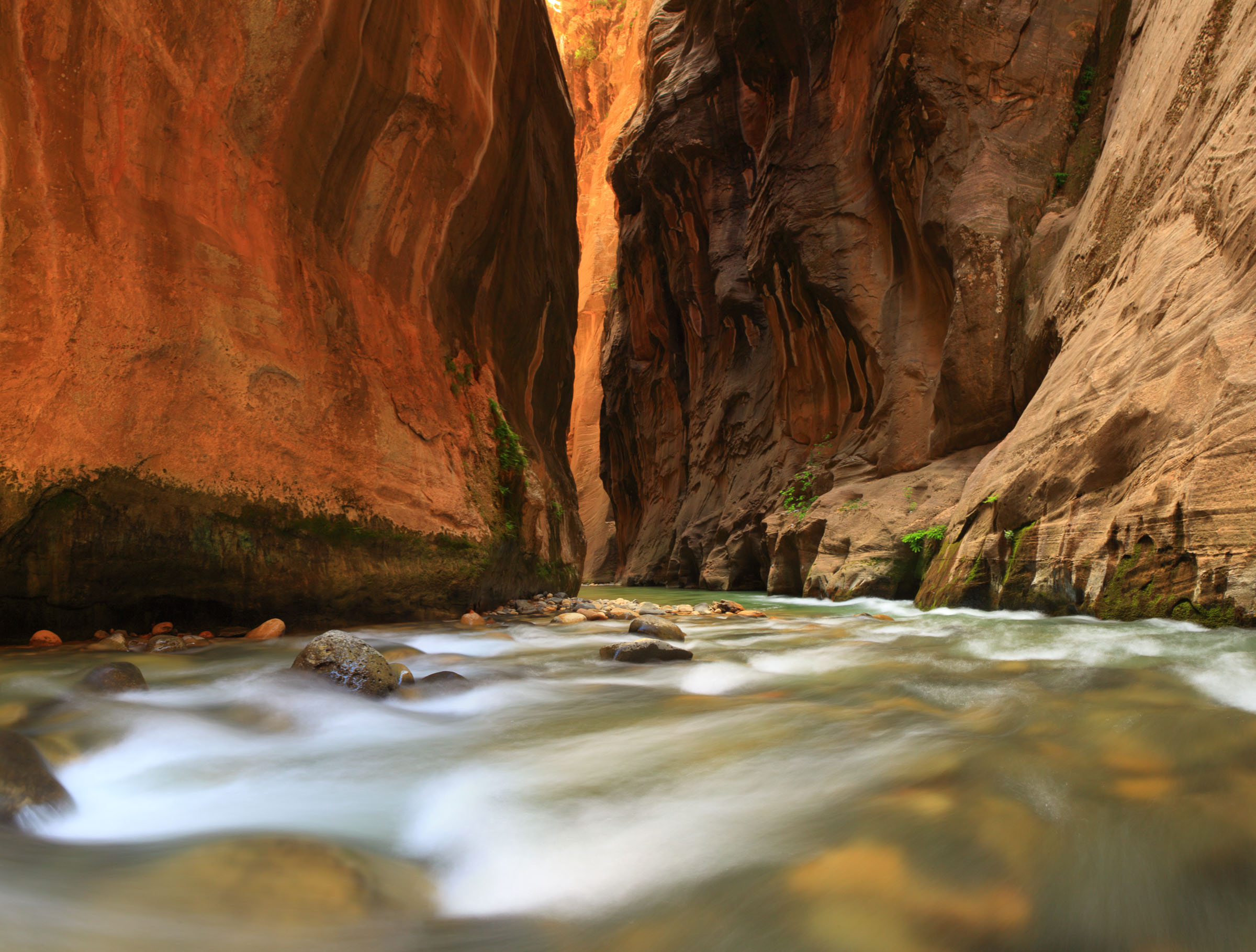
2) The Narrows, Zion National Park
Where: Zion National Park in southwest Utah
Distance: out and back roundtrip as far as Orderville Canyon, 4 miles. A full
trip north to south is 16 miles.
Trailhead: Temple of Sinawava, at the end of the Zion Canyon Road
Video: Hiking the Zion Narrows, shot
during my 2010 visit.
Upstream of Zion Canyon in Zion National Park the
Virgin River flows for several miles through the Zion Narrrows, a narrow gorge that in
places is no more than thirty feet wide but perhaps a thousand feet deep. There are
many narrow canyons in the Southwest (including the incredible
Paria Canyon / Buckskin Gulch, which is not
too far away) but
in my opinion the Narrows is the finest that can be explored without
technical equipment. The narrowest
sections, where the river fills the gorge completely, are an incredible sight, and are
close enough to the Temple of Sinawava trailhead to be easily accessible on an out and back
hike. The hike is enormously entertaining - there's no real trail and for most of the way
you progress upstream by wading from sandbank to sandbank in knee to thigh deep water. A
wading staff comes in very handy. To see the best of the Narrows you need to make it at
least as far as the junction of Orderville Canyon, which joins the Narrows near the start
of a magnificent stretch that extends all the way up to Big Spring.
The only downside of this hike is that it's dependent on good weather - you don't want to
venture into the Narrows if the forecast danger from flash floods (updated daily and available
in the Park) is anything but "low". Your chances are probably best in June, September or early
October, when in most years the water is not too cold and the danger of flash floods is (relatively) small.
I've also hiked the Narrows in November. The river is cold at that time of year, but it's easy to rent
a drysuit and appropriate boots in Springdale, and wearing those the hike is surprisingly comfortable.
In the event that the Narrows is out of bounds
there are other excellent hikes in Zion, including the West Rim trail, which,
especially if you add on the optional side-trip to Angels' Landing, has a claim to being in the top ten itself.
3) Cirque of the Towers, Wind River Range
Where: Bridger Wilderness, Wyoming
Distance: 18.5 miles out and back to Lonesome Lake
Trailhead: Big Sandy trailhead
When: summer. The pass above the Cirque is quite exposed, so doing this as a day hike you'll want to watch the weather and get an early start to beat possible storms.
Wyoming's Wind River range is premier backpacking country, but the most famous single spot - the Cirque of the Towers - can be hiked out and back from the Big Sandy trailhead as a day hike. The first 6 miles to Big Sandy Lake are on excellent trail, and most of the remaining distance is well-graded and easy to follow. Altitude might pose a challenge (the high point at Jackass Pass is 10,800 feet), and we found the stretch of rocky trail above Arrowhead Lake hard to follow. Don't underestimate the difficulty of reaching the trailhead either, most of the long approach on unpaved roads is straightforward but the last ten miles is rough and took us the better part of an hour to navigate even with decent ground clearance! The reward for these efforts is several miles of high altitude hiking among spectacular peaks, that just gets better and better until you arrive at Lonesome Lake and the Cirque of the Towers. It's one of the most amazing locations in the US Rocky Mountains.
4) Highline trail to the Grinnell Glacier Overlook, Glacier National Park
Where: Glacier National Park, in northern Montana
Distance: 15 miles as an out and back from Logan Pass, 13 miles one way
ending at the Loop on the Going-to-the-Sun road
Trailhead: Logan Pass visitor center
When: summer
Glacier National Park, adjoining the Canadian border in northern Montana, boasts
breathtaking glacial scenery, an extensive trail system, and exceptional opportunities to
see wildlife including grizzly bears, which are often easier to see here than in the Canadian
Rockies or Alaska. My recommended day hike in the park
follows the Highline trail from Logan Pass along the base of the Garden Wall. After about 7 miles
of moderate hiking, featuring
non-stop views out to the peaks in the western half of the park, the trail reaches a junction with the Grinnell Glacier Overlook trail.
From the junction, it's a viciously steep climb of a thousand feet in less than a mile
to a notch in the Garden Wall overlooking Upper Grinnell Lake and the Grinnell Glacier.
It's worth the effort - the panorama here is as spectacular as any you'll find accessible
by trail in a US National Park.
Returning to the Highline from the overlook, it's possible to either backtrack to
Logan Pass (15 miles in all, this is what we did), continue on toward Granite Chalet
and descend to The Loop further West along the Going-to-the-Sun road (13 miles),
or cross Swiftcurrent Pass and descend into the Many Glacier area emerging at the
Swiftcurrent Motor Lodge (17 miles). A hiker shuttle in the park makes the one-way
options feasible.
5) Paintbrush / Cascade Canyon loop, Grand Teton National Park
Where: Grand Teton National Park, Wyoming
Distance: 19 mile loop
Trailhead: String Lake
When: summer. Snow on the Paintbrush Divide, which doesn't melt out till August,
is the limiting factor in this hike.
An exceptional loop hike amid some of the most spectacular mountain scenery in
the lower 48 states, the Paintbrush Canyon / Cascade Canyon loop gets an upgrade
to #4 on this list after I hiked it a second time in Fall 2014. It was just as
much fun a second time as the first! Starting from the String Lake trailhead it's
more scenic to hike the loop counter-clockwise, starting with the
ascent through Paintbrush Canyon to almost 11,000 feet at the Paintbrush Divide.
These first 8 miles are stiff work, but once you reach the Divide the rest of the
day is mostly downhill with the jagged peaks of the Tetons a continual backdrop.
The trail passes Lake Solitude and Hidden Falls, both of which
are attractive destinations, and the short side trip to Inspiration Point overloking
Jenny Lake is also worthwhile.
It's possible to cut a couple of miles off the total by riding the boat back
across Jenny Lake, or you can walk the last section of the trail around the
northern shore of the lake back to the trailhead.
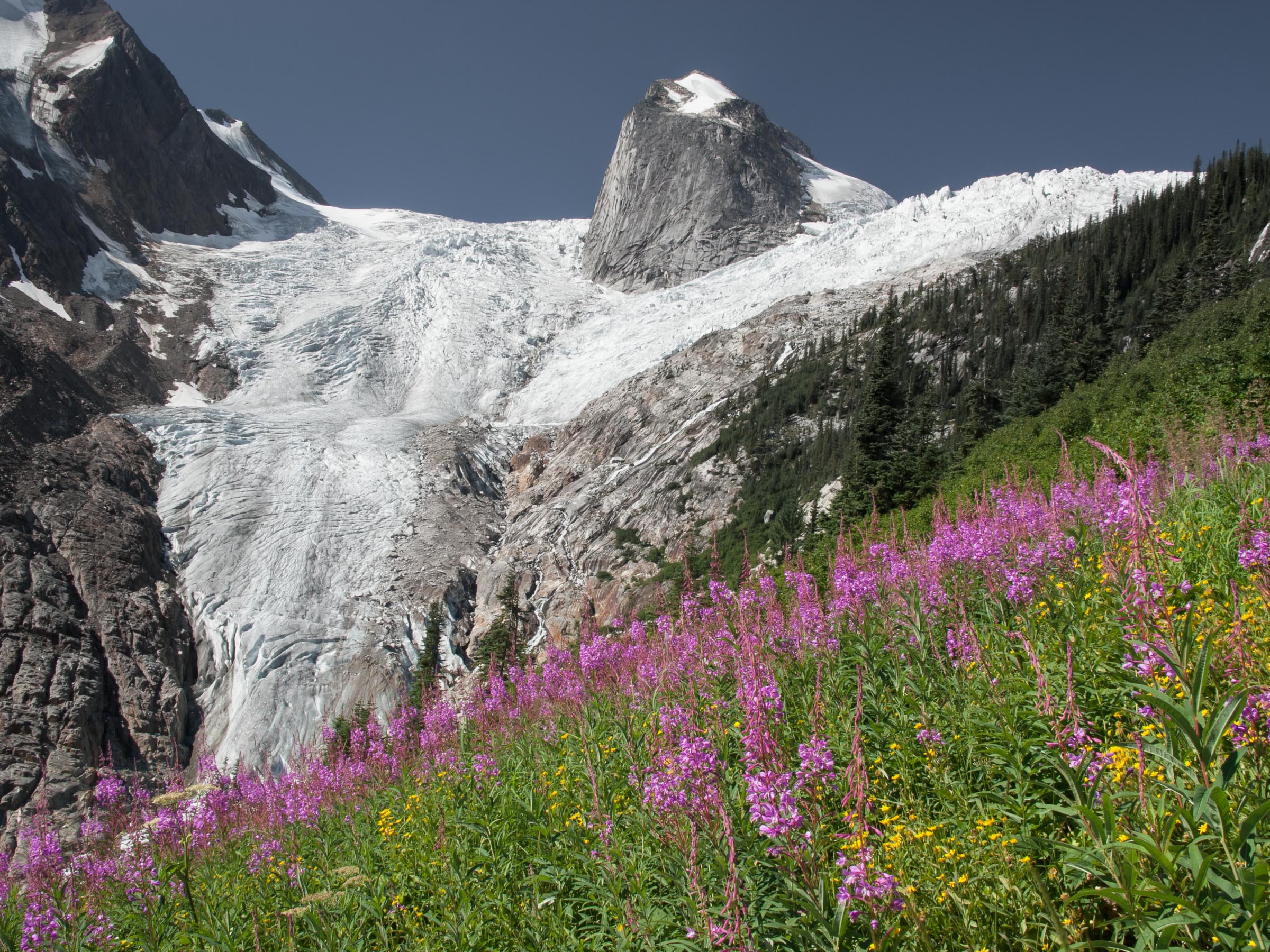
6) Conrad Kain hut, Bugaboo Provincial Park
Where: Bugaboo Provincial Park, British Columbia
Distance: 6 (steep!) miles out and back
Trailhead: Bugaboo Spires trailhead, about 30 miles west of
Brisco on Highway 95 on rough dirt roads
One of the shortest hikes in this list is also the most remote, and part of the enjoyment of
hiking in the Bugaboos is the lack of crowds (this is a famous climbing destination,
but few hikers seem to make the short drive over from the Rockies into the Purcells).
The trail to the Conrad Kain hut is short but steep, and
in places the route is protected by cables bolted into the rock. There's even one spot where
you climb a steep section with the aid of a metal ladder, but the trail is in excellent shape
and at least in dry weather these aids are more for reassurance than for necessity. The views
of the Hound's Tooth, with the Bugaboo glacier flowing past the spire and down the valley,
are continual and astounding throughout the hike, and is season there are nice patches of
wildflowers in several small meadows along the trail.
7) Coyote Gulch, Grand Staircase - Escalante National Monument
Where: Grand Staircase - Escalante National Monument, Utah
Distance: 14 miles out and back
Trailhead: Hurricane Wash trailhead, about 33 miles down the Hole-in-the-Rock
road from its junction with Utah 12 just outside Escalante
When: spring and fall are probably best
Coyote Gulch in the Escalante is one of the most impressive canyons in the Southwest. The sinuous
sandstone canyon features spectacular rock arches, deeply undercut alcoves, and
lush vegetation. It's an unforgettable sight, and far enough off the beaten (and paved)
track as to be only moderately trafficked. Out of several approaches the easiest (which I followed) is via Hurricane Wash, in
which case you have about 5 miles of pleasant but unremarkable hiking before the
real drama of Coyote Gulch begins. On a day hike it's straightforward to make it as
far as Jacob Hamblin arch, which is also a good place to camp if you're backpacking
(don't expect to be alone though). With the right skills
it's also possible to make a loop from the Forty Mile Ridge trailhead
by first heading to the lower Gulch, then hiking upstream and exiting the canyon near Jacob
Hamblin Arch. The climb out of the canyon, however, is exposed and borderline dangerous without
climbing skills. Whatever option you choose, the canyon is a must-see destination
and highly recommended.
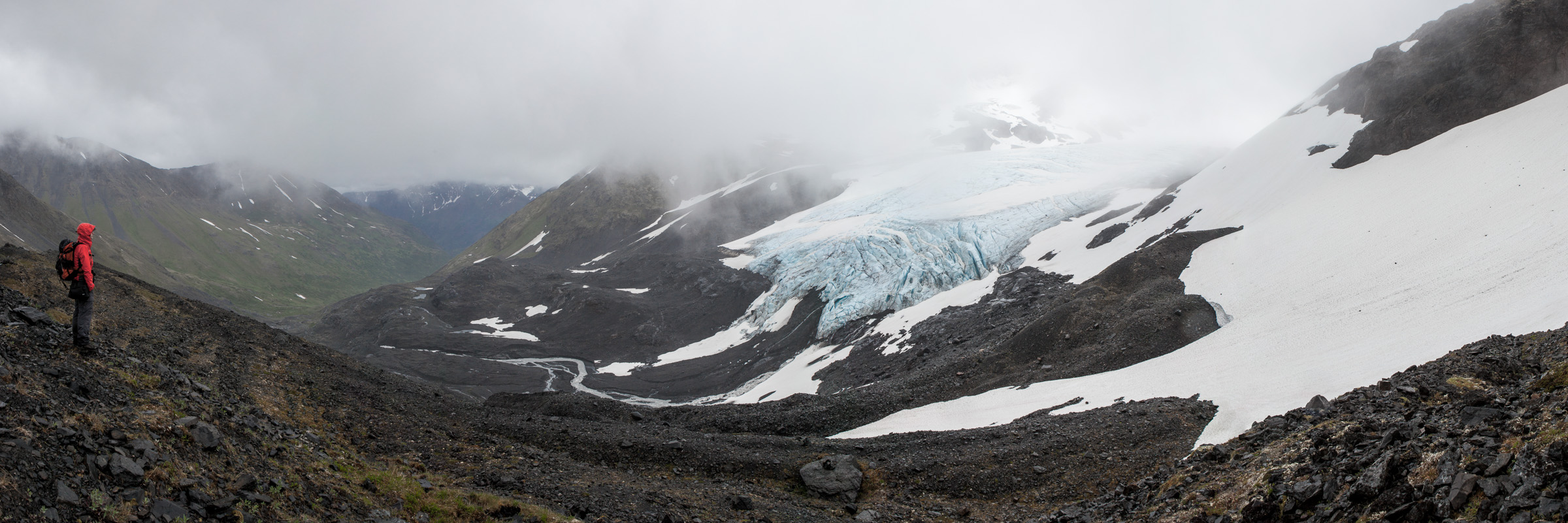
8) Crow Pass trail to the Raven glacier
Where: Chugach State Park, Alaska
Distance: 8 miles out and back
Trailhead: Crow Pass trailhead, about 45 miles from Anchorage. From Exit 90 on the Seward highway, head north 2 miles,
then turn left onto Crow Creek road. Fork right after the bridge about 5 miles in to reach the parking area.
When: summer
The historic Crow Pass trail features spectacular and varied scenery whose highlight is the Raven Glacier, which, although not enormous by Alaskan
standards, has a wild backcountry setting. The Crow Pass trailhead is already at moderate elevation, and in no time one clears the trees and
emerges onto the slopes of the Crow Creek valley. From there, it's a basically straight route up the valley to reach the pass at its head. There are a couple
of different trails, a lower route that passes some old mining detritus and a small waterfall, and a slightly easier route that cuts higher along the east
side of the valley. The junctions are easy to miss, but as long as the creek above the waterfall is easy to cross (as it was for us, doing the trail in
mid-July) it doesn't really matter which route you take. Reaching Crystal Lake at the head of the valley, the climbing is over, and the trail continues
gently over the pass to reach the Raven Glacier and a view down along Raven Creek toward the Eagle River valley.
Although it's not in a National Park,
the trail is well-maintained, and in season (mid-June to September, depending on the extent of winter snows) this is a popular, moderate day hike that's one
of the best in the Anchorage area.
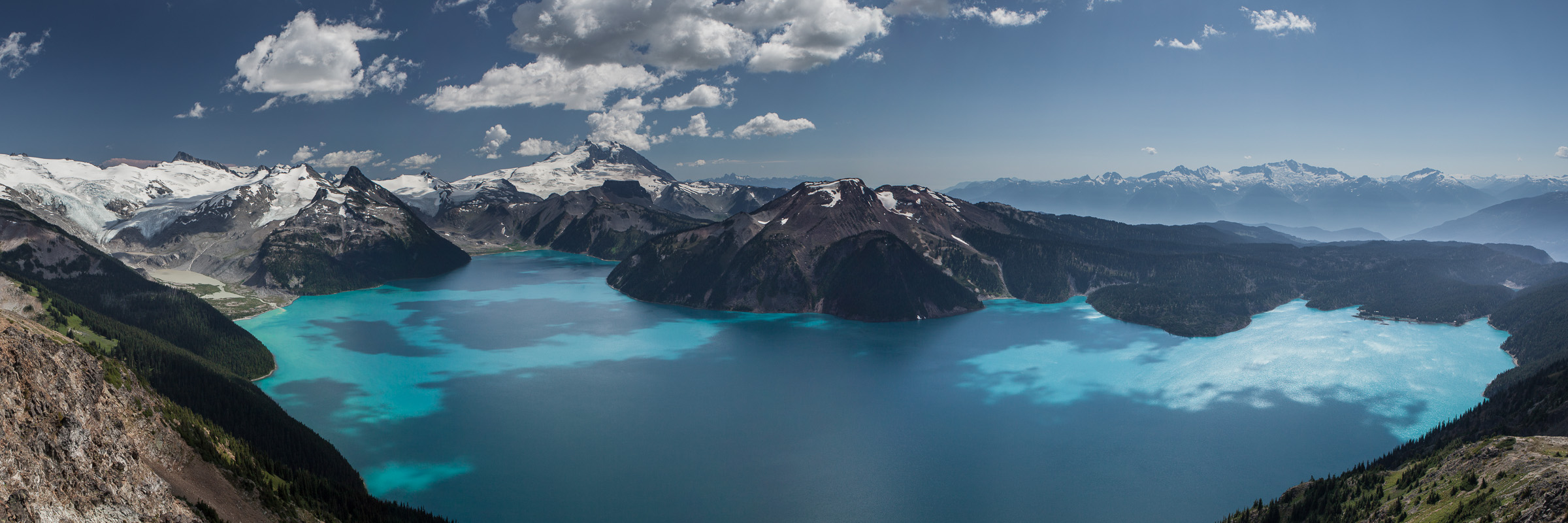
9) Panorama Ridge trail, Garibaldi Provincial Park
Where: Garibaldi Provincial Park, British Columbia
Distance: 17.5 miles by the shortest route
Trailhead: Rubble Creek parking lot, 33km north of Squamish (or 25km south of Whistler) on Highway 99. There's a fee for parking (cards are
accepted).
When: summer. Expect to cross some small snowfields on the final climb to the ridge early in the season.
Garibaldi Provincial Park, just a short drive north of Vancouver, is home to by far the most accessible
sliver of British Columbia's mighty Coast Mountains. The trail to the Panorama Ridge - the
best hike in the park - is long and, especially near the start, steep, with a total elevation
gain of some 5,000 feet. In truth the first few miles, as you climb relentlessly upward through the
forest, might be described as drudgery. These travails are soon forgotten, however, once the trail
clears the trees at Taylor Meadows. From here on the exertion starts to pay off as views of snowy peaks
emerge and the trail traverses (in late July) some of the richest wildflower meadows I've ever seen.
A final steep ascent brings you to the Panorama Ridge, and a truly breathtaking vista. Mount Garibaldi,
the Tantalus Range, and the Black Tusk frame the intense blue of Garibaldi Lake to form a 360 degree portrait
of what looks like boundless wilderness. This is a spot to savor, so be sure to bring protection
against bugs or you might need to beat a hasty retreat - the one downside of the Coast Mountains is
the presence of dense swarms of black flies, which will envelope you the moment you pause to rest or eat lunch!
10) Panhandle Gap, Mount Rainier National Park
Where: Mount Rainier National Park, Washington
Distance: 12 miles out and back
Trailhead: At Fryingpan Creek, near the Sunrise entrance
When: summer. Even then, expect to traverse a snowfield to read the Gap.
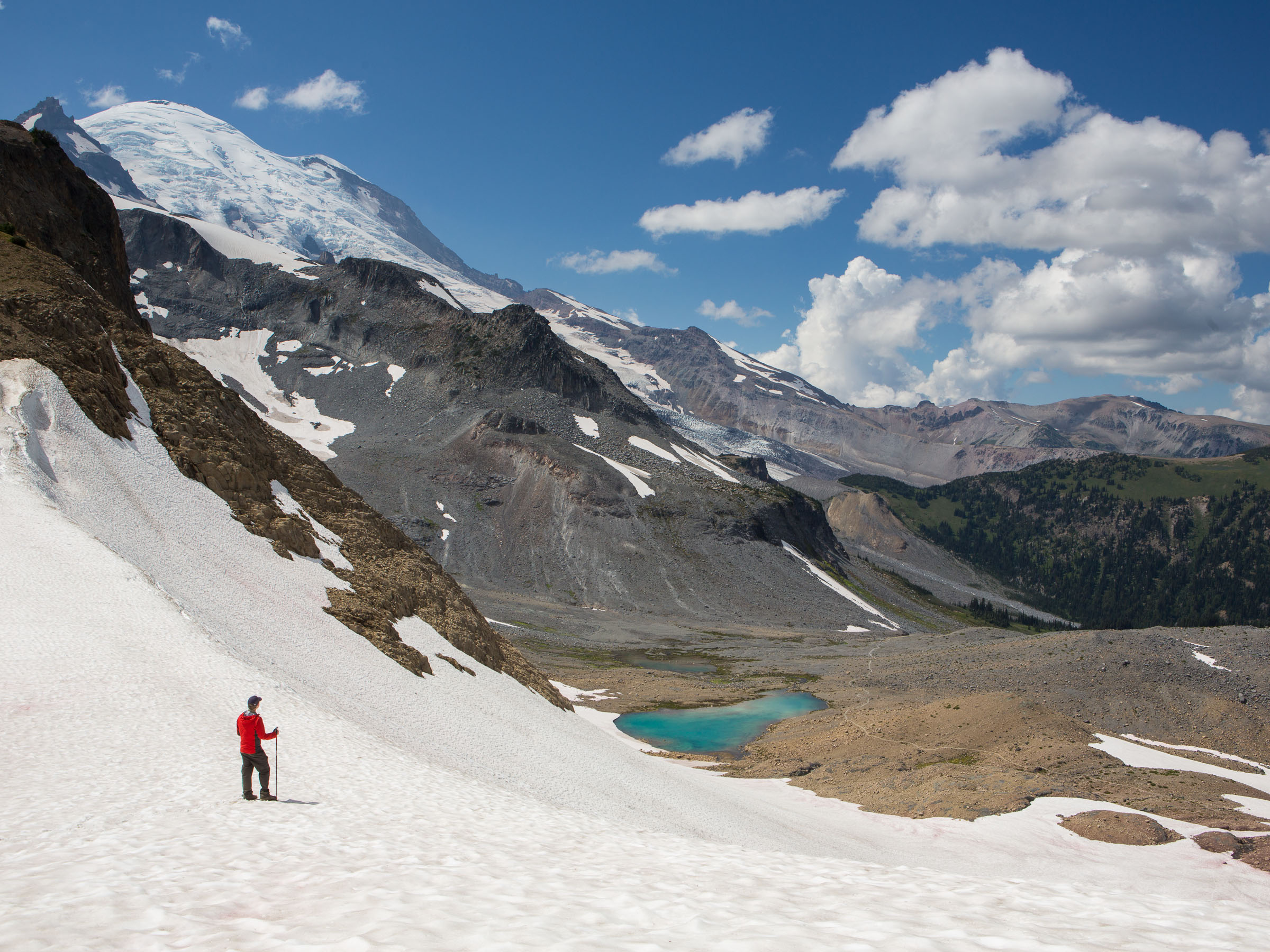
In my book Mount Rainier is the most impressive peak you can see in America without crossing the border or venturing
to Alaska, and you can hardly go wrong with any of the hikes that keep The Mountain in view. The trails out of
Paradise are, however, very busy, so for a somewhat more wilderness experience I'd recommend starting from the
Sunrise entrance on the east side of the park. Starting from the valley, you can hike the famous Wonderland
trail (which circumnavigates Rainier in a 93 mile loop) up to its high point at the Panhandle Gap. The first
hour or so is steep and not too special, but this early effort is amply rewarded thereafter by a succession
of astounding vistas: wildflower meadows at Summerland, icy cold lakes, and expansive views of the glaciers
on Rainier as you climb to the Gap. This is a day hike that really tempts you to backpack the whole
Wonderland trail around Rainier!
Bonus hike: Panorama trail, Yosemite National Park
Where: Yosemite National Park, California
Distance: 8.5 miles one way from Glacier Point to the Valley floor
Trailhead: Glacier Point
When: May through to the first snowfall in the Fall. Best early in the
season when Yosemite's waterfalls are at their peak.
Almost of the trails in Yosemite offer exceptional views, but they're also typically
crowded and during busy periods of the year the scrum down in the Valley is frankly best avoided.
Instead of one of the routes starting on the Valley floor I'd recommend the
Panorama trail, much of which is surprisingly lightly frequented. The hike starts at Glacier Point - which
itself affords one of the best drive-up panoramas to be found in America's
National Park - and stays high for about four miles as it traverses the edge
of the Valley, passing along the way Illilouette Falls. There are great views
of Half Dome, Liberty Cap and the Valley Falls for almost all of this stretch.
Approaching the top of Nevada Falls you can either take the scenic but very wet
Mist trail down to the Valley, passing both Nevada and Vernal Falls, or the
slightly less scenic but drier John Muir trail. At the peak of the Spring
runoff both waterfalls are spectacular sights. I did this hike as a partial
loop from Glacier Point - descending via the John Muir trail and
coming back via the Mist trail - which made for a strenuous but
unforgettable 16 mile day. In the summer, though, you can also catch a
bus from the Valley floor up to Glacier Point, in which case the 8.5
mile hike down to the Valley is almost all downhill.
Bonus hike: Grizzly Lake, the Tombstones
Where: Tombstone Territorial Park, the Yukon
Distance: 14 miles out and back
Trailhead: Grizzly Creek, at km 58.5 along the Dempster Highway
When: summer
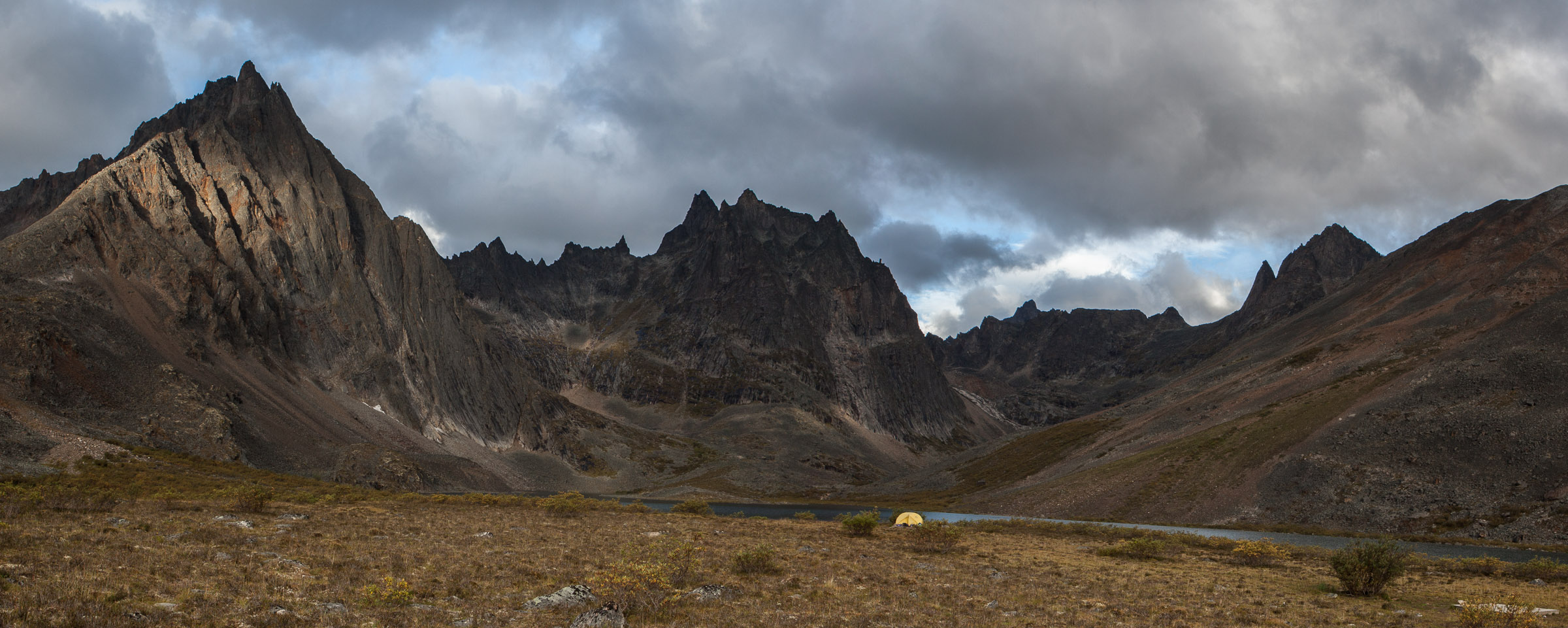
There's no dispute that the hike to Grizzly Lake is the best trail in the
Yukon's Tombstone Territorial Park - it's the only trail in the park - and it's also one of the most memorable I've
done. Here you're in true wilderness; the unpaved Dempster highway, which runs for hundreds of kilometers
across the Arctic Circle, starts a day's drive north of Whitehorse. The nearest community is Dawson
City, once the hub of the Klondike gold rush and well worth visiting for historical as well as hiking reasons.
Vegetation is sparse this far north, and the Grizzly Lake trail climbs quickly out of the trees and brush
to reach the Monolith Lookout with open views of the granite spires of the Tombstones. From there it's a
strenuous but basically straightforward route along the high slopes of the valley all the way until the
trail drops down to Grizzly Lake in the shadow of the peaks. You could hike out and back to the lake in a
day (summer days are very long at this latitude), but having come this far it makes more sense to savor
the experience and camp. That's what we did, and my only regret is not having had more time to press on
to Divide Lake and see more of this wonderful range.
Are these really the ten best hikes in America? Of course not! Quite apart from
the fact that there are twelve, none of which are in Mexico, this list is a subjective ranking of
trails that I've personally
hiked. I certainly hope that I haven't exhausted the best that North America
has to offer yet! Hikes I know about (but haven't done) that might one day make this list include the Sahale Arm in the North Cascades, and hikes out of Kennicott in Wrangell-St Elias
National park. Surely there are many more I
don't know about. Finally my own personal bias is toward full day hikes
that leave you exhausted but with a real sense of accomplishment at the end of the day. If the
metric were instead maximum scenic reward for minimum effort the list would look
very different, with the
Eielson ridge trail
in Denali National Park, the
Delicate Arch trail
in Arches, and the
Parker Ridge trail
in Banff being hard to beat. Still, whether or not these are
the best trails out there I can almost
guarantee that none of the hikes above will disappoint. Enjoy!
Disclaimer: these are all non-technical hikes, mostly on excellent trails in
National Parks. Still, the number of ways in which people can come
to grief in the
outdoors is almost limitless, and both mountains and narrow canyons pose their
share of dangers. Conditions change from
season to season (and sometimes from hour to hour), so don't rely on my word and take
all due care. I'd particularly note that
many of these are pretty long and strenuous hikes that might work better as short
backpacks than day hikes for some folks.